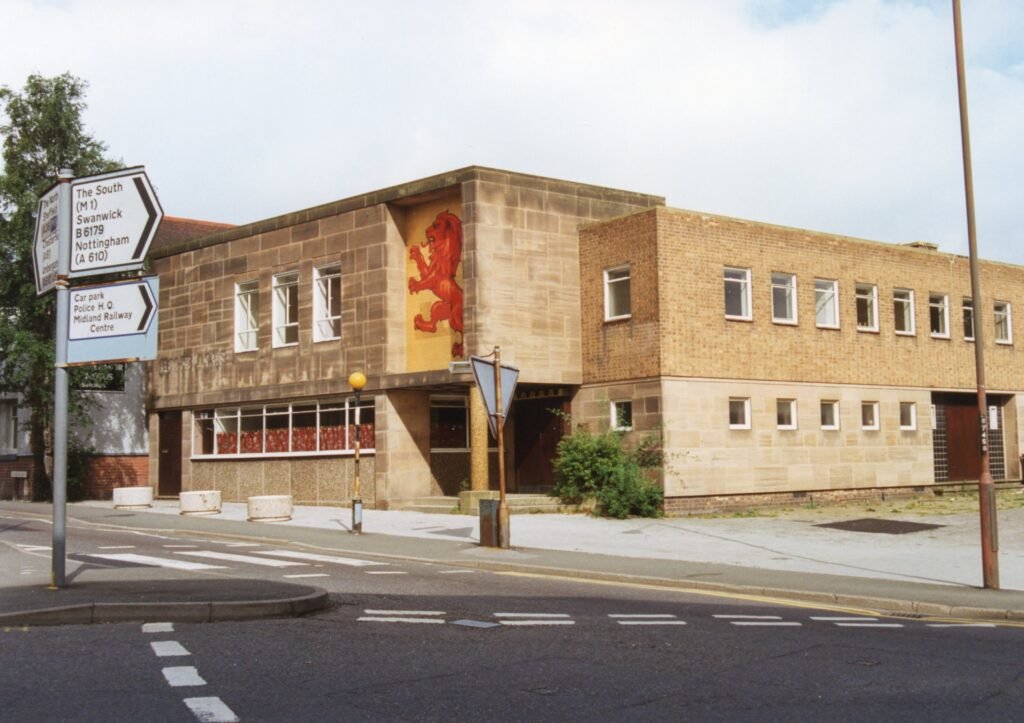
There has been an inn on this site for at least 250 years, possibly much longer. In a document of 1577, there were 10 alehouses listed in Ripley and Pentrich; only the names of the publicans were listed, but there is a fair chance that one of them was on this prime site in the Market Place.
The first written reference to the Red Lion is in 1761, when the Derby Mercury announced that a land sale was taking place at the inn, the seller being the landlord, Joseph Turton. On his death a few years later, his wife Sarah Turton ran the pub for sixteen years.
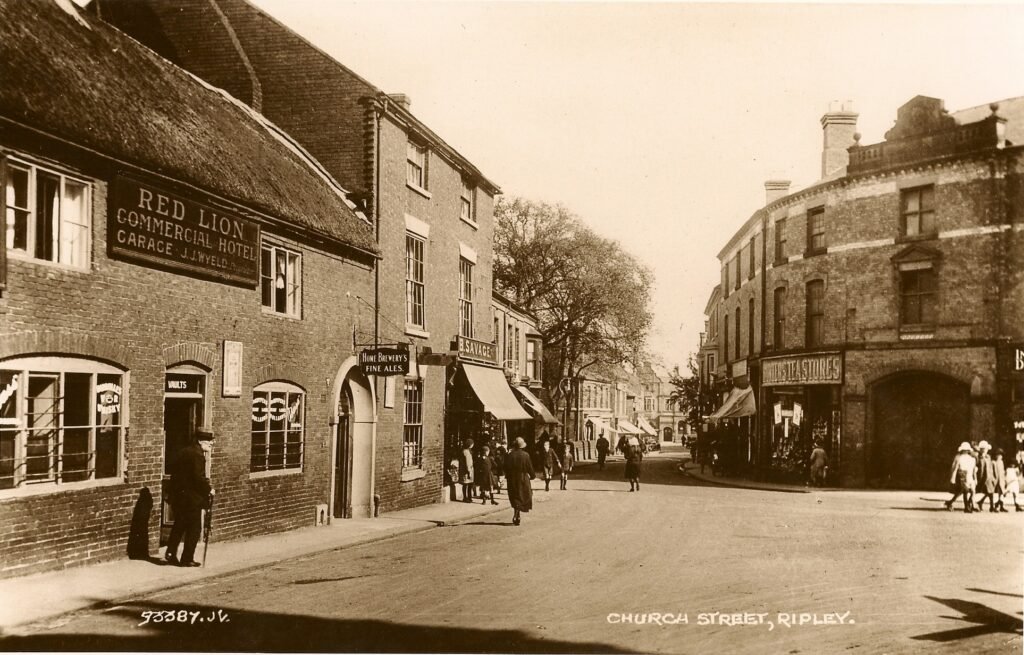
It was originally thatched, until about 1906 when the thatch was replaced by tiles. It was a coaching inn, on the route from Birmingham to Sheffield, and would have provided overnight accommodation, meals, and stabling for horses. The coaches not only brought passengers but also parcels and letters, which were collected from the inn. There was also a large room for meetings and assemblies.
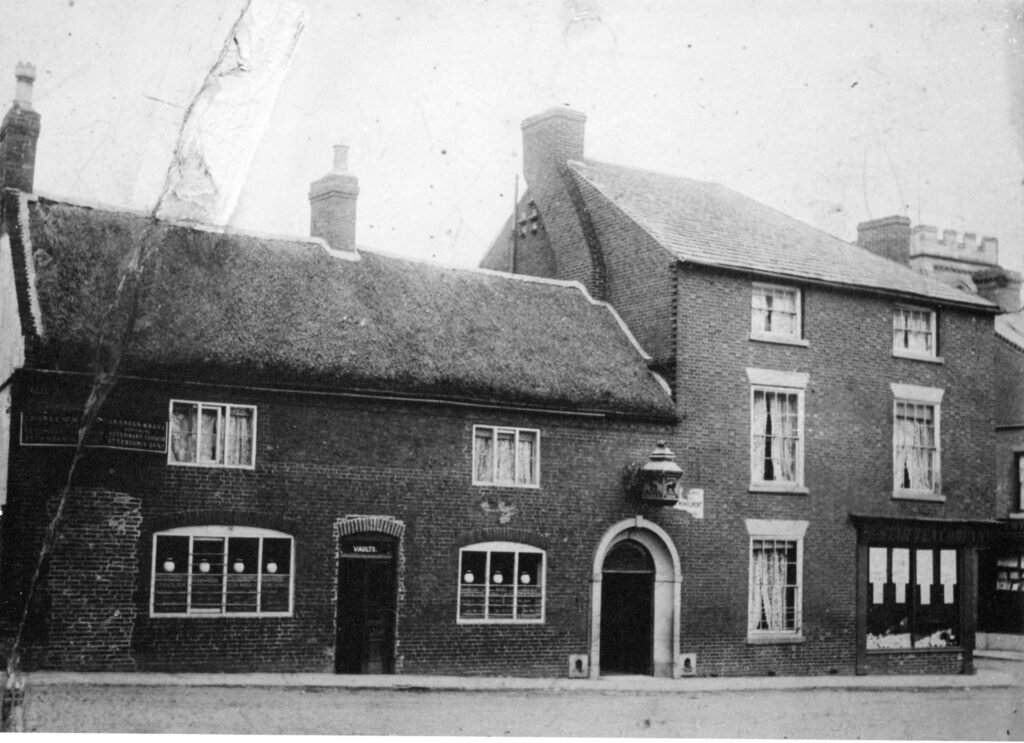
It continued with little change until 1810 when it was partially rebuilt and sold. The sale document described it as having: “stabling for 20 horses, two coach houses, three parlours at the front with bar, wash-house, brewhouse” (like most pubs at the time, they brewed their own beer) “and pantry in the rear, whilst upstairs could be found a large assembly room 30 feet long and 17 1/2 feet wide with a temporary gallery and 6 lodging rooms and on the next floor, another 3 lodging rooms. A spacious yard was also accessible from the street.”
The coaches disappeared with the coming of the railways, and the post went to the Post Office in Rowland’s shop next door.
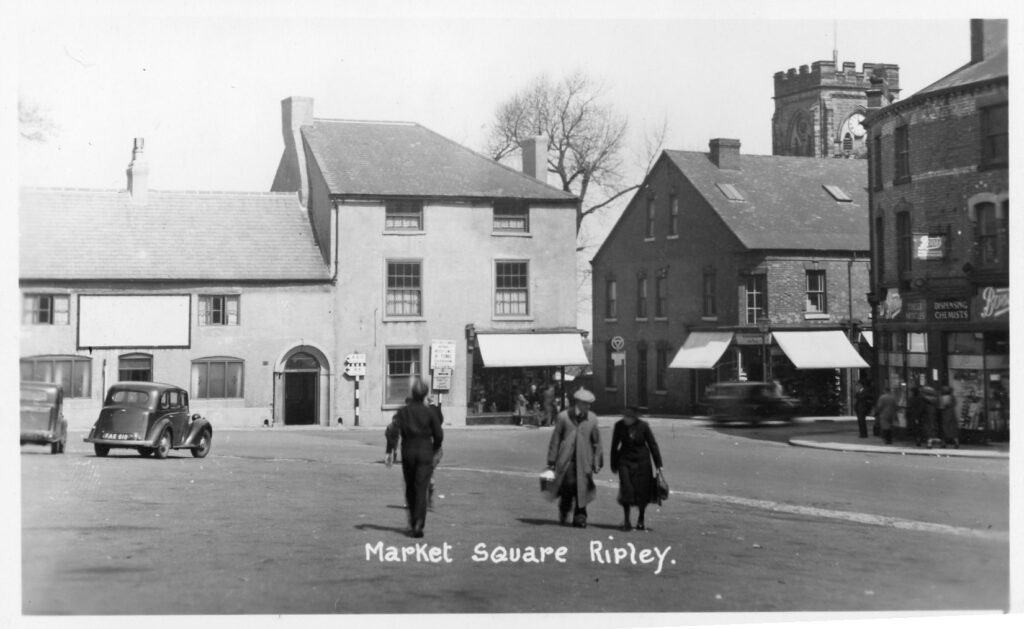
The premises were owned by various breweries during the 19th and 20th centuries, but the pub was partially demolished one foggy morning in 1956 when a lorry crashed into it, his brakes having failed as he turned into Cromford Road.
Frank Mansey takes up the story: “The demolition squad moved in soon afterwards. A new Red Lion was built in 1959, but it had neither the similarity in appearance nor the ambience of the old building, and it closed in 1990. It was eventually bought by Amber Valley Borough Council to be used firstly as offices, and then as a store until, as they intended, it was to be demolished to provide parking space. Instead they sold it”, and the present owners completely rebuilt it in a concrete brutalist style, opening in 1996.